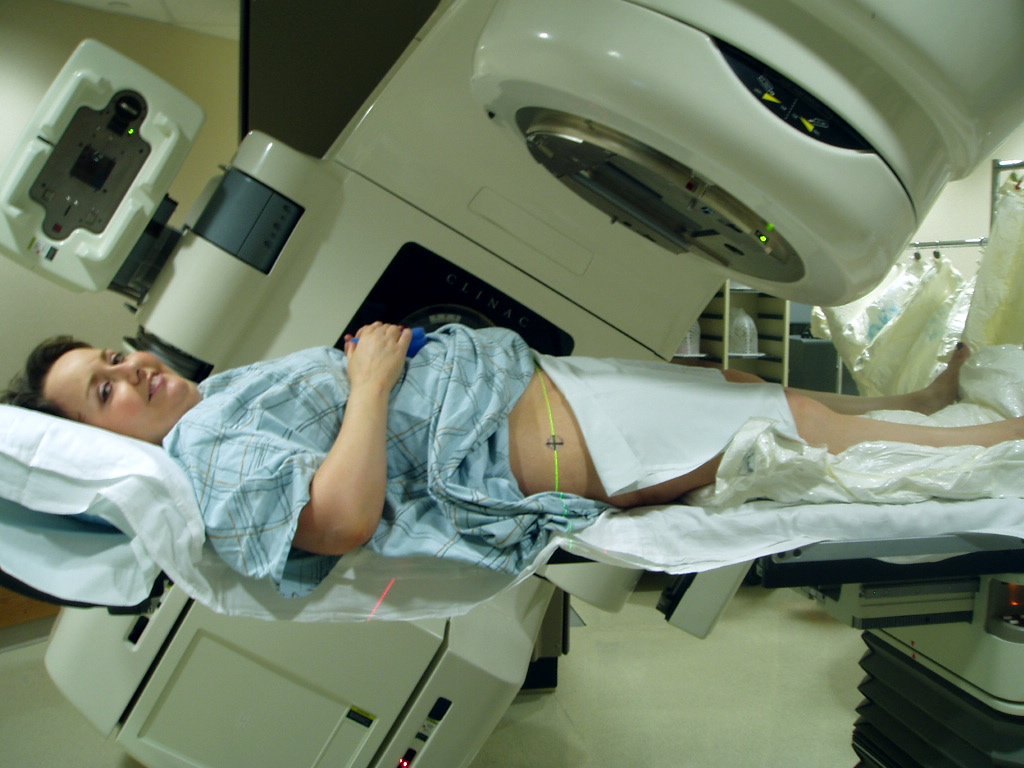
Follow a realistic day in radiotherapy, from morning QA and patient setup to treatment delays, engineering calls, imaging, and teamwork. The aim is to show how many small technical decisions sit behind a calm treatment appointment, and why engineers, radiographers, physicists, and clinicians all need each other.
Radiotherapy departments have a rhythm that is hard to understand until you spend a day inside one. The building may feel calm, but the workflow is tightly choreographed. Patients arrive every few minutes. Treatment rooms depend on machines that must deliver millimetre-level precision. Radiographers manage care, imaging, positioning, documentation, and emotion. Physicists keep the treatment quality assured. Engineers watch for the quiet signs that a system is drifting before it fails.
This is not a factory. It is a clinical service where advanced technology meets people who may be frightened, tired, hopeful, or in pain.
7:00 AM: The Department Wakes Up
Before the first patient lies on the couch, the machines need checks. Daily QA may include output constancy, imaging checks, laser alignment, door interlocks, audiovisual systems, couch motion, and safety systems. The exact routine varies by machine, local policy, and treatment complexity.
If daily QA fails, the day changes immediately. A small output deviation may require physics review. A laser issue may affect setup confidence. An imaging fault may delay image-guided treatments. The department has not even started treating yet, but the pressure is already real.
Engineer’s Insight
A good morning QA process is not a box-ticking exercise. It is the department asking, "Can we trust this machine for today's patients?"
8:00 AM: First Patients and First Decisions
The first patients are often booked early for practical reasons: transport, work, fasting, combined appointments, or treatment complexity. The radiographers check identity, consent status, treatment site, imaging instructions, accessories, and any clinical notes.
For a prostate patient, setup may involve bladder and bowel preparation. For a head and neck patient, the immobilisation mask must fit properly. For a breast patient, breath-hold coaching may be needed. For SABR, positioning tolerance can be very tight.
Every treatment is a balance between speed and attention. A busy department cannot drift, but it also cannot rush the wrong detail.
The Control Room Is the Nerve Centre
The control room is where radiographers watch the patient on camera, monitor treatment parameters, review setup images, and communicate with the patient. It may look like a bank of screens, but each screen represents a safety function or clinical decision.
Treatment delivery depends on multiple systems agreeing:
- Treatment planning system.
- Oncology information system.
- Record-and-verify system.
- LINAC control system.
- Imaging system.
- Patient positioning and immobilisation.
- Staff judgement.
If one system disagrees, treatment may stop.
Real World Scenario
A patient is set up for pelvic radiotherapy. The CBCT shows the bladder is much smaller than expected, moving bowel closer to the high-dose region. The radiographers pause, speak with the clinician or review protocol, and the patient may need to drink water and wait. The machine is fine, but the workflow still changes.
Engineering Is Often Invisible Until It Is Needed
Hospital engineers are not usually standing in the room for every treatment. They may be in the workshop, plant room, another bunker, or on the phone with a vendor. But their work is everywhere: preventative maintenance, fault histories, parts stock, network troubleshooting, accessory checks, UPS systems, cooling plant, safety interlocks, and service reports.
Radiotherapy engineers need a special kind of calm. A LINAC issue can delay a queue of patients, but hasty troubleshooting can create bigger problems. The engineer must communicate clearly: what is known, what is not known, how long checks might take, and whether the machine should stay clinical.
Midday: The Schedule Starts to Bend
By lunchtime, the department may already be dealing with small delays. One patient needed extra imaging. Another arrived late because hospital transport was delayed. A treatment plan needed physics review. A machine had a short interlock. A clinician was called to approve a change.
Busy radiotherapy is not busy because people are disorganised. It is busy because cancer treatment has many dependencies.
Why This Matters
Students often learn radiotherapy as a clean sequence: plan, setup, image, treat. Real departments add patient comfort, machine status, staffing, transport, clinical reviews, data systems, and safety checks.
Adaptive and Image-Guided Workflows Add Capability and Complexity
Modern departments increasingly use advanced imaging, online matching, surface guidance, motion management, and adaptive workflows. These improve precision, but they also increase technical dependence.
An adaptive treatment may require rapid contour review, plan adaptation, QA, and approval while the patient waits. This is powerful medicine, but it is also a demanding operational model. Strong departments invest not only in machines but in training, staffing, protocols, and engineering support.
The Human Side of Repetition
Some patients attend every weekday for several weeks. Radiographers may notice weight loss, anxiety, skin reactions, or changes in mobility before anyone else does. Technical staff working around these patients quickly learn that every "fraction" is also a person trying to get through treatment.
For engineers, this can be grounding. Fixing a couch fault is not abstract when you know twenty patients are waiting and one of them has travelled two hours.
Late Afternoon: Catching Up
If a machine has been down, the department may extend the day. Staff may work through breaks or stay late. Patients may be moved between matched machines if safe. Engineering may keep troubleshooting after clinical hours so the next morning starts clean.
This is where good documentation pays off. A clear fault log helps the next engineer. A good handover helps the late team. A consistent escalation process helps managers make fair decisions.
What Students Should Notice on Placement
If you visit a radiotherapy department, do not only look at the LINAC. Watch the handovers. Watch how staff communicate uncertainty. Watch how a small technical issue travels through the schedule. Notice how often safety is achieved through teamwork rather than one person having all the answers.
Ask thoughtful questions:
- What daily QA is required before treatment?
- What faults cause the most downtime?
- How are partial treatments handled?
- How do radiographers escalate imaging concerns?
- What does engineering check before releasing a machine?
The Afternoon Review Work Nobody Sees
Radiotherapy work continues after the patient leaves the room. Images may need offline review. Treatment records need checking. Notes may be added for tomorrow's setup. Any unusual tolerance override or setup difficulty may be flagged. If the patient is losing weight, struggling with bladder filling, or repeatedly moving during treatment, the team may discuss whether a review scan or clinical assessment is needed.
This behind-the-scenes review is easy to miss because it does not look as dramatic as beam delivery. But it is one reason radiotherapy can remain safe over a multi-week course. A patient is not the same every day. Swelling changes. Pain changes. Breathing changes. Weight changes. Confidence changes. The department has to keep noticing.
When a New Technique Enters the Department
Introducing a new technique, such as breath-hold breast treatment, stereotactic treatment, surface guidance, or online adaptive therapy, changes the daily rhythm. Staff need training. QA procedures need updating. Booking times may need adjustment. Engineers may need to understand new accessories, cameras, gating interfaces, software licenses, and failure modes.
The first few weeks of a new service often feel slower because everyone is deliberately careful. That is not inefficiency. It is safe implementation. Once the workflow matures, the technique becomes routine, but only because a lot of planning happened before the first patient.
Practical Pressure Points in a Busy Day
Several pressure points repeat across many departments:
- First patient delays can echo through the whole list.
- Transport patients may be difficult to rebook at short notice.
- Complex image matching can require senior review.
- Machine faults create both technical and emotional pressure.
- Late plan approvals can disrupt scheduling.
- Staff shortages reduce flexibility when problems arise.
Students should understand that a department running late is not necessarily a department running badly. Often it is a department absorbing complexity while trying to keep patients safe.
What Makes a Department Feel Well Run
A well-run radiotherapy department is not one where nothing ever goes wrong. It is one where problems are noticed early, escalated clearly, and handled without chaos. You can often feel it in the way staff speak to each other. Handover is specific. Delays are explained. Junior staff know who to ask. Engineers are given useful fault information. Patients are updated before anxiety fills the silence.
Technology also has to be arranged around the work. Accessories should be easy to find. Immobilisation devices should be stored logically. QA tools should be available when needed. Control room displays should make the important information visible without forcing staff to hunt through screens. These small operational details protect attention.
For students, this is a powerful lesson. Healthcare technology succeeds when it is embedded in a workflow that people can actually use. A machine can be world-class and still cause frustration if the surrounding process is weak.
Future Trend: More Connected Departments
Radiotherapy departments are becoming more data-driven. Machine logs, treatment delivery analytics, QA platforms, scheduling tools, and AI-supported imaging may become more connected. The opportunity is better visibility. The risk is alert fatigue and over-complicated workflows.
The departments that succeed will be the ones that make technology serve the clinical day, not the other way around.
FAQs
Do radiotherapy departments run like normal outpatient clinics?
They share outpatient pressures, but the dependency on complex treatment machines, imaging, physics QA, and precise scheduling makes the workflow different.
Why are appointments sometimes delayed?
Common reasons include patient preparation, imaging review, machine faults, emergency cases, transport delays, and clinical decision-making.
Who works in radiotherapy?
Radiographers, clinical oncologists, medical physicists, dosimetrists, engineers, nurses, administrators, and support staff all contribute.
Key Takeaways
- Radiotherapy is a high-precision clinical operation.
- Morning QA sets the tone for the day.
- Radiographers manage both technology and patient experience.
- Engineering support protects uptime and safety.
- Advanced workflows increase both treatment capability and operational complexity.
Conclusion
A busy radiotherapy department is one of the clearest places to see modern healthcare technology in its true form. It is not just machines and software. It is people making careful decisions under time pressure, using engineering to deliver treatment with accuracy and compassion.
Useful Sources
- NHS England radiotherapy services: https://www.england.nhs.uk/cancer/treatment/radiotherapy/
- Society and College of Radiographers: https://www.sor.org/
- IAEA human health radiotherapy resources: https://humanhealth.iaea.org/
Related GoBioEng Reading
Varian LINAC Student Guide | Radiotherapy Engineering Career Path | Infusion Pump Engineering Guide