Every radiotherapy treatment depends on RF power, vacuum, cooling, imaging, MLCs, couch accuracy, software, QA, and engineering teamwork. This guide opens the machine room view of cancer treatment, showing how hidden subsystems work together to deliver a prescribed dose safely and repeatably.
To a patient, radiotherapy may look like a quiet machine rotating around them for a few minutes. To the engineering team, that short treatment is the visible end of a long chain of systems: power, RF, vacuum, cooling, beam steering, imaging, motion control, software, QA, safety interlocks, and human checks.
Radiotherapy works because hidden engineering behaves predictably, day after day.
The Treatment Starts Before the Patient Arrives
Before treatment delivery, the patient has already been through simulation, imaging, contouring, planning, review, approval, and scheduling. The LINAC receives a treatment plan that specifies beam angles, monitor units, MLC positions, dose rates, couch positions, imaging instructions, and accessories.
The machine cannot simply "fire radiation." It must deliver a planned dose distribution with accuracy and traceability.
Why This Matters
Radiotherapy is not one device doing one job. It is a controlled system where planning data, patient setup, machine geometry, and beam output must align.
RF Power: The Engine Room of the Beam
Medical LINACs use radiofrequency energy to accelerate electrons. Depending on the design, RF power may come from a magnetron or klystron, supported by a modulator, waveguide, circulator, loads, cooling, and control electronics.
If the RF system is unstable, beam output may become unstable. Engineers watch for trips, reflected power, arcing, temperature changes, and component ageing. A radiographer may only see a beam hold. The engineer sees a chain of possible causes.
Vacuum: The Quiet Requirement
Electrons need an evacuated path through the accelerator. Poor vacuum can cause beam instability, arcing, or inability to operate. Vacuum systems are usually out of sight, but their health is essential.
Vacuum problems can be tricky because they may develop gradually. A machine might work for a while, then trip under certain conditions. Trend data and fault history become important.
Cooling: The System Everyone Notices When It Fails
LINACs generate heat. RF components, targets, bending magnets, electronics, and imaging systems may depend on cooling. Chillers, water circuits, flow sensors, filters, temperature sensors, and plant room conditions all affect reliability.
A cooling issue can stop treatment even if the beam physics components are otherwise healthy. In summer or during hospital plant problems, cooling becomes a major engineering concern.
Engineer’s Insight
A hospital machine is never isolated from the building. Power quality, air conditioning, chilled water, network rooms, and plant maintenance can all become radiotherapy issues.
Beam Shaping: Jaws and MLCs
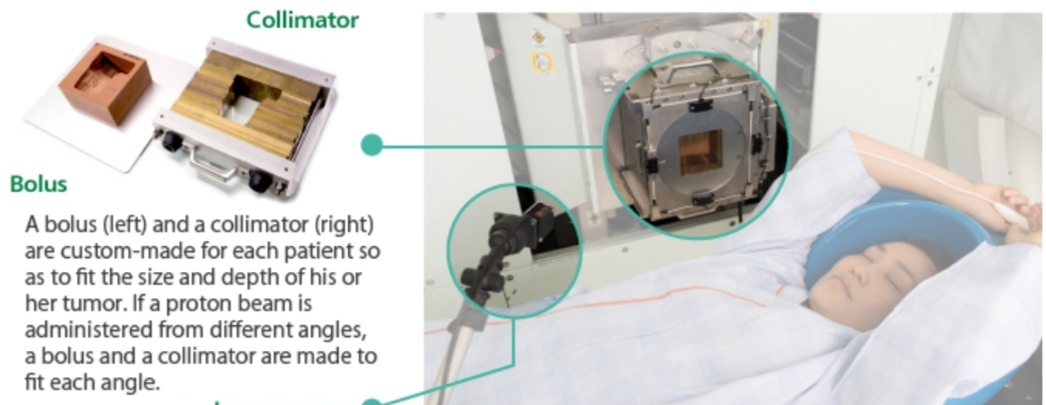
The multi-leaf collimator, or MLC, is one of the most impressive parts of a modern LINAC. Dozens or hundreds of small tungsten leaves move to shape the beam. In IMRT and VMAT, leaf positions change dynamically while dose is delivered.
Each leaf must know where it is. Motors, encoders, calibration files, controllers, and mechanical tolerances all matter. A tiny position error can trigger an interlock. This is good: the system is refusing to treat if the beam shape is not as expected.
Imaging: Seeing Before Treating
Image guidance helps confirm that the patient is positioned correctly. CBCT, kV imaging, MV imaging, surface guidance, and other tools allow staff to compare current anatomy with planned anatomy.
Engineering support for imaging includes detectors, panels, arms, calibration, reconstruction systems, mechanical alignment, network connections, and software performance.
Image quality is not cosmetic. A poor image can reduce confidence in setup, delay treatment, or require additional checks.
Couch and Motion Systems
The treatment couch must position the patient accurately and reproducibly. Modern couches may move in multiple axes, sometimes with six degrees of freedom. Motion accuracy, collision avoidance, indexing, load limits, and immobilisation compatibility matter.
A couch fault may seem less dramatic than a beam fault, but positioning is part of dose accuracy. If the patient is not where the plan assumes, even a highly accurate beam is not enough.
Software and Record Integrity
Treatment delivery relies on software systems agreeing. The plan must be approved, the patient record must match, the correct fraction must be selected, and delivery parameters must be recorded.
Software faults can be frustrating because the hardware may be fine. A plan transfer problem, database issue, license problem, or network delay can stop the clinical workflow.
Real World Scenario
A LINAC passes morning QA, but the first patient cannot be loaded because the oncology information system cannot communicate with the treatment console. Engineering, IT, and vendor support investigate. The machine is physically ready, but clinically unavailable until data flow is restored.
Interlocks: The Machine Saying No
Interlocks are one of the most important hidden safety systems. They prevent beam delivery when required conditions are not met. Some interlocks are simple, such as treatment room door status. Others are deeply technical, linked to dose monitoring, beam steering, MLC position, gantry motion, cooling, vacuum, or software state.
To a beginner, interlocks can feel like interruptions. To an experienced engineer, they are evidence that the system is protecting the patient and staff. The skill is learning which interlocks can be cleared after checks and which indicate a deeper machine problem.
The Role of Log Files
Modern radiotherapy systems generate detailed logs. These logs can show beam parameters, motion commands, component states, communication errors, and fault sequences. Engineers use them to reconstruct what happened, especially when a fault is intermittent.
Log analysis is becoming more important as systems become more software-heavy. A fault may involve timing between subsystems rather than a visibly broken component. The engineer who can read logs, understand the physical machine, and speak with the clinical team has a major advantage.
Accessories and Small Components Matter
Not every radiotherapy engineering issue is deep inside the accelerator. Indexing bars, couch tops, immobilisation devices, imaging panels, hand pendants, foot switches, door systems, lasers, and room cameras all affect treatment. A worn accessory or loose connector can disrupt the day just as effectively as a major RF fault.
This is why routine visual checks and staff reporting matter. Small faults are easier to fix when they are caught before they become clinical delays.
Calibration Links the Machine to Reality
Calibration is where the machine's internal numbers are tied back to measured reality. Dose output, mechanical isocentre, imaging geometry, couch motion, MLC position, laser alignment, and detector behaviour all need verification against standards and local tolerances.
This is why radiotherapy engineering and medical physics are closely connected. The engineer may adjust or repair a component, but physics measurements often confirm that clinical performance is acceptable. Neither side works safely in isolation.
Students should understand that calibration is not just "making the machine pass." It is creating confidence that the digital plan, physical beam, and patient position refer to the same geometry and dose model.
Environmental Stability
Radiotherapy bunkers are controlled environments. Temperature, humidity, water cooling, power stability, and room infrastructure can influence equipment performance. A LINAC may be inside a beautiful clinical room, but it depends on plant equipment that patients never see.
When environmental systems drift, faults may appear random. A machine may trip only after several hours of treatment, or only during hot weather, or only when another building system is under load. Good engineers therefore look beyond the machine cabinet and ask what the building is doing.
Why Preventative Maintenance Feels Clinical
Preventative maintenance can look like engineering time taken away from treatment slots, but it protects future treatment capacity. During planned maintenance, engineers can inspect wear, replace parts before failure, verify safety systems, clean filters, check motion systems, review logs, and perform vendor-recommended procedures.
The challenge is scheduling. Departments need machines available for patients, but machines also need protected time for maintenance. When maintenance is squeezed too tightly, faults may appear during clinical hours instead. A mature department treats maintenance as part of the clinical service, not an interruption to it.
This is an important mindset for students. Reliability is built during the quiet hours, long before anyone calls the engineer in a hurry.
QA: Trust Built Through Repetition
Quality assurance is the discipline that turns complex engineering into safe clinical service. Daily, monthly, annual, and patient-specific QA processes test output, imaging, geometry, MLC behaviour, couch accuracy, safety systems, and treatment delivery.
QA may feel repetitive, but repetition is the point. It builds trend awareness. It catches drift. It gives staff confidence that today's treatment is linked to yesterday's calibrated performance.
The Future: More Integrated Engineering
Future radiotherapy systems will be more adaptive, data-driven, and connected. MR-guided radiotherapy, proton therapy, AI-assisted planning, online adaptation, and automated QA will increase the importance of software, networking, cybersecurity, and systems thinking.
The hidden engineering will not disappear. It will become more integrated.
That integration will make communication even more important. A future fault may involve the LINAC, imaging system, adaptive planning software, patient database, network latency, and QA platform at the same time. The engineer who can coordinate calmly across those boundaries will be central to safe treatment.
FAQs
What is the most important part of a LINAC?
There is no single most important part. Beam generation, beam shaping, imaging, motion, safety, cooling, software, and QA all contribute to safe treatment.
Why does radiotherapy need so much QA?
Because small errors can matter. QA confirms that the machine, imaging, geometry, and treatment delivery remain within accepted tolerances.
Do radiotherapy engineers need to understand clinical treatment?
Yes. They do not need to be clinicians, but they must understand how machine behaviour affects patient workflow and treatment safety.
Key Takeaways
- Radiotherapy delivery depends on many hidden engineering systems.
- RF, vacuum, cooling, MLCs, imaging, couch motion, and software all affect treatment.
- QA turns machine complexity into clinical confidence.
- Fault diagnosis requires systems thinking.
- Future radiotherapy will demand stronger integration between engineering, physics, IT, and clinical teams.
Conclusion
Every radiotherapy treatment is a quiet engineering achievement. When the patient hears the beam buzz and the gantry moves, they are hearing years of design, maintenance, calibration, software control, and teamwork. Strong engineering is often invisible because it works.
Useful Sources
- AAPM reports and quality assurance resources: https://www.aapm.org/pubs/reports/
- IAEA radiotherapy dosimetry and quality assurance: https://www.iaea.org/topics/dosimetry
- NHS radiotherapy services: https://www.england.nhs.uk/cancer/treatment/radiotherapy/
Related GoBioEng Reading
Varian LINAC Student Guide | Radiotherapy Engineering Career Path | Infusion Pump Engineering Guide