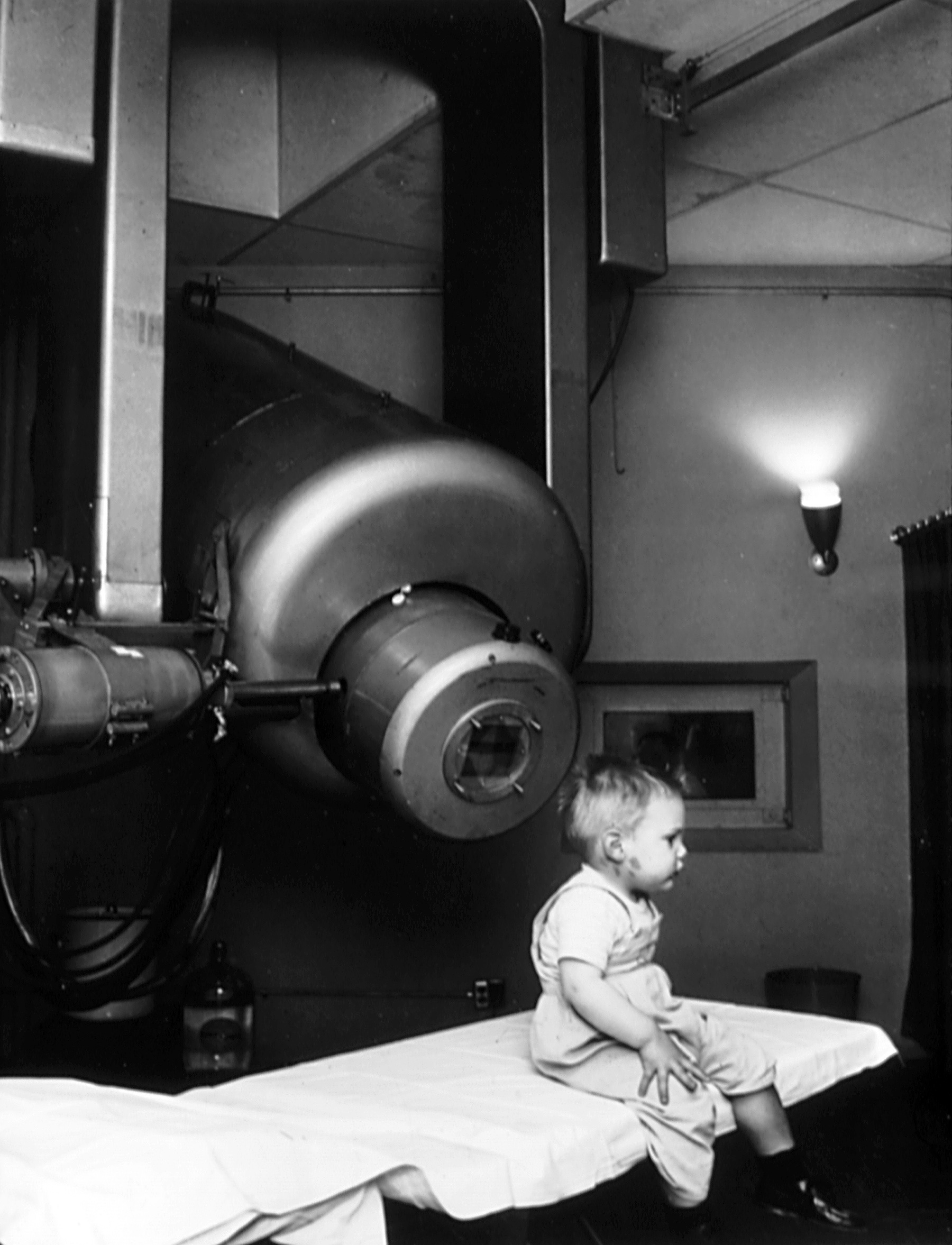
Radiotherapy technology is advanced, but the patient experience depends on communication, trust, comfort, workflow, and human-centred engineering. A treatment machine can be technically perfect and still feel frightening, so good departments design both the equipment pathway and the human experience with care.
Radiotherapy is often described through machines: LINACs, MLCs, CBCT, VMAT, proton therapy, adaptive planning. Those systems matter. But for the person on the couch, radiotherapy is also the mask being clipped down, the voice through the intercom, the cold room, the waiting, the breath-hold instructions, and the trust that everyone knows what they are doing.
The human side of radiotherapy technology is not separate from safety. It is part of safety.
The Machine Can Feel Intimidating
A radiotherapy LINAC is large, quiet, and unfamiliar. The patient may be alone in the room during beam delivery. The gantry moves around them. The couch shifts. Imaging panels extend. Alarms and buzzes may sound normal to staff but unsettling to someone new.
Radiographers bridge that gap. They explain what the patient will feel, what they will not feel, when staff will leave the room, how communication works, and why staying still matters.
Real World Scenario
A patient having head and neck treatment becomes anxious when the immobilisation mask is fastened. The treatment is technically ready, but the team pauses. A radiographer explains each step, practises breathing with the patient, and agrees a hand signal. The treatment proceeds safely because the human problem was handled first.
Immobilisation Is Technical and Personal
Immobilisation devices help reproduce patient position. Masks, moulds, wing boards, knee supports, vacuum cushions, breast boards, and indexing systems all support accurate setup.
For engineers and students, these may look like accessories. For patients, they can feel restrictive. A mask may trigger claustrophobia. A treatment position may be painful. A breath-hold technique may feel stressful.
Human-centred technology asks: can the device do its job while preserving dignity and comfort as much as possible?
The Control Room Relationship
During treatment, staff leave the room, but they do not leave the patient. Cameras, microphones, intercoms, monitors, and emergency systems maintain contact. A patient may not understand the technology, but they understand the tone of the voice speaking to them.
The control room is therefore both technical and emotional. Staff are matching images, checking parameters, monitoring motion, recording treatment, and reassuring the patient.
Engineer’s Insight
Audiovisual systems are not optional comforts. If the intercom is poor, if cameras are unreliable, or if room speakers crackle, patient confidence and staff safety are affected.
Delays Feel Different to Patients
A ten-minute technical delay may be routine for staff. For a patient, it can feel like something has gone wrong with their cancer treatment. This is why communication matters during downtime.
Departments should avoid vague silence. Even a short update helps: "The machine is doing a safety check. We are reviewing it before continuing." Patients do not need every engineering detail, but they deserve to know they have not been forgotten.
Technology Should Reduce Burden, Not Add It
New technology can improve precision, but it can also add steps. Daily image guidance, breath-hold systems, adaptive workflows, surface guidance, and online approvals may extend time on the couch.
The challenge is to design workflows that are clinically strong and patient-aware. If a system improves dose but makes treatment intolerable for a specific patient, the team needs options.
Why This Matters
Human-centred radiotherapy does not mean being less technical. It means using technical skill to make accurate treatment achievable for real patients.
The Staff Experience Matters Too
Human factors affect staff as well as patients. Radiographers work under concentration pressure. Physicists manage complex quality decisions. Engineers may be called urgently while clinics are waiting. Repeated exposure to cancer care can be emotionally heavy.
Good technology design supports staff by making the safe action clear, reducing unnecessary clicks, preventing ambiguous states, and giving useful alarms rather than noise.
When Engineering Decisions Affect Patient Trust
Patients rarely meet the engineer who fixed the camera, calibrated the couch, replaced the MLC part, or restored the network connection. But they feel the result. A room that runs smoothly helps patients trust the service. Repeated pauses, unclear communication, or visible staff frustration can undermine that trust.
This is why engineering reliability is also a patient experience issue.
Accessibility and Inclusion
Radiotherapy departments treat people with different languages, hearing ability, mobility, cognitive needs, anxiety levels, and cultural expectations. Technology must work for this variety.
Examples include clear visual instructions, accessible changing areas, safe transfer aids, interpreters, hearing support, readable appointment information, and staff trained to recognise distress.
Designing Rooms for Real People
The treatment room is an engineering space, but it is also a patient space. Lighting, temperature, noise, privacy, couch access, ceiling marks, wall finishes, and storage all influence the experience. A room designed only around the machine may work technically but feel harsh to patients.
Small details matter. Can a patient with limited mobility get onto the couch safely? Is there somewhere private to adjust clothing? Can staff reach immobilisation equipment without leaving the patient unsupported? Is the intercom clear? Does the camera view cover the patient without feeling intrusive? Is the emergency stop accessible to staff?
Human-centred design turns these questions into engineering requirements.
The Special Case of Children and Young Adults
Paediatric and teenage radiotherapy brings additional emotional and practical challenges. Children may need play specialists, anaesthetic support, customised immobilisation, family communication, and carefully designed preparation. Young adults may understand the technology but struggle with loss of control, body image changes, or disruption to education and work.
Technology can help, but relationships matter. A child who trusts the team may tolerate setup better. A young adult who understands the reason for each step may feel less powerless.
When Staff Need Support
Radiotherapy staff often carry emotional load quietly. They may treat the same patient for weeks and then never know the final outcome. They may support anxious families, handle delays, and manage complex technology while staying calm.
Departments that care for staff create better patient experiences. Debriefs after difficult incidents, good staffing levels, training time, and psychological support are not luxuries. They protect the service.
Communication During Technical Problems
Technical problems test the human side of a department. If the machine stops, the patient may not understand that an interlock is protective. They may only hear silence or see staff leave and return. Clear communication turns uncertainty into trust.
Good communication is honest without being alarming. Staff can say, "The machine has paused because it has detected something we need to check. You are safe, and we will explain the next step." That sentence does not overpromise, but it gives the patient a frame.
For engineers, the same principle applies when speaking to clinical staff. A useful update is practical: what is being checked, whether the room is unavailable, when the next update will come, and whether patient moves should be considered.
Patient Feedback Should Influence Technology
Patients can reveal problems that staff stop noticing. A room may feel too cold. A mask explanation may be unclear. A buzzer may sound frightening. Appointment information may not explain why bladder preparation matters. These are not soft complaints. They affect compliance, comfort, and workflow.
Departments that listen to patient feedback can improve technical success. A patient who understands the process is more likely to arrive prepared, hold still, tolerate imaging, and report concerns early.
Human Factors in the Control Room
The control room is full of human factors. Screen layout, alarm wording, lighting, noise, interruptions, staffing, fatigue, and workload all influence performance. A radiographer may need to monitor the patient, compare images, check treatment parameters, speak through the intercom, answer a colleague, and respond to an alarm within the same few minutes.
Good design reduces unnecessary cognitive load. Important alarms should be distinct. Critical information should be easy to find. Workarounds should be investigated rather than accepted as normal. If staff repeatedly bypass a step or create handwritten reminders, the system may be telling the department that the workflow needs redesign.
Engineers and software teams should listen to these signals. A control room is not a showroom. It is a working clinical environment where design decisions affect attention and safety.
Compassion Is Practical
Compassion in radiotherapy is not sentimental. It has practical effects. A reassured patient is more likely to remain still. A patient who trusts the team is more likely to report discomfort before it becomes a setup problem. A staff member who feels supported is more likely to speak up about a concern.
This is why the human side belongs in a technology article. The emotional atmosphere of the department influences whether the technical system can do its job well.
Future Trend: Personalised Patient Experience
Future radiotherapy may personalise not only dose but experience. Digital preparation tools, better patient education, virtual walkthroughs, improved immobilisation design, surface guidance, adaptive scheduling, and patient-reported outcome tools can all help.
The goal is not to make cancer treatment pleasant. The goal is to make it less frightening, more understandable, and safer.
Strong future tools will be judged by both clinical accuracy and lived experience. Did the patient understand what was happening? Did staff have fewer unnecessary interruptions? Did the technology support dignity as well as precision? Those questions belong in the design room.
FAQs
Does radiotherapy hurt during treatment?
External beam radiotherapy is usually painless during delivery, although treatment positions, masks, or side effects over time can be uncomfortable.
Why does the patient stay alone in the room?
Staff leave because radiation is delivered in the room, but they monitor the patient continuously through cameras and intercom systems.
Can anxiety affect treatment?
Yes. If a patient cannot stay still or tolerate immobilisation, the team may need extra support, coaching, or adjusted workflow.
Key Takeaways
- Radiotherapy technology affects how patients feel, not only how dose is delivered.
- Communication is part of safe treatment.
- Immobilisation and imaging are both technical and personal.
- Engineering reliability influences patient confidence.
- Human-centred design will become more important as treatments become more complex.
Conclusion
Radiotherapy is advanced engineering in service of a vulnerable human moment. Strong departments understand both sides. They deliver accurate treatment, but they also remember the person listening to the machine move around them.
Useful Sources
- NHS radiotherapy patient information: https://www.nhs.uk/conditions/radiotherapy/
- Cancer Research UK radiotherapy information: https://www.cancerresearchuk.org/about-cancer/treatment/radiotherapy
- Society and College of Radiographers: https://www.sor.org/
Related GoBioEng Reading
Varian LINAC Student Guide | Radiotherapy Engineering Career Path | Infusion Pump Engineering Guide