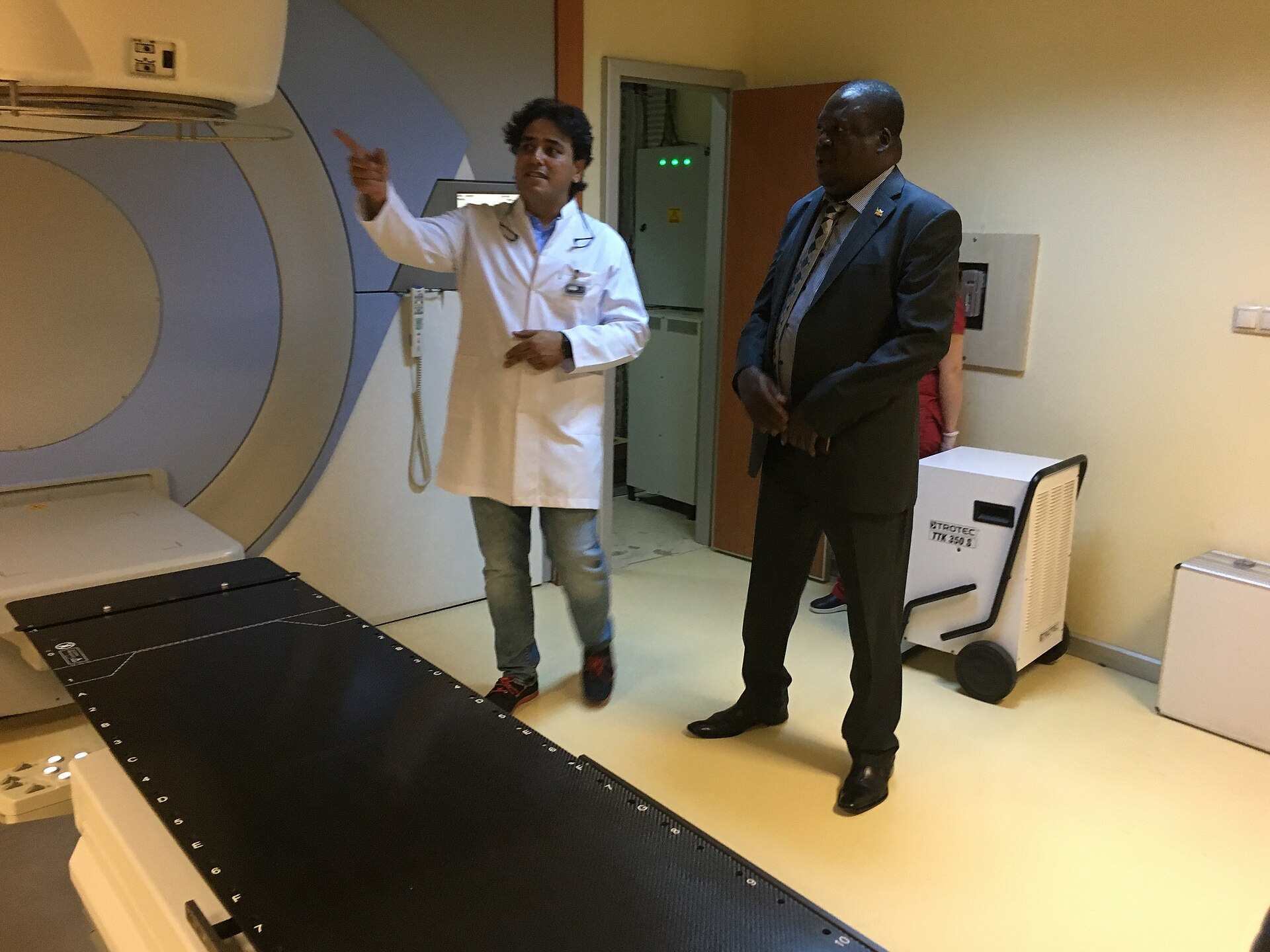
Cancer technology work combines advanced equipment, emotional pressure, downtime risk, safety culture, and fast-changing clinical demands. The work can be rewarding, but it asks engineers to stay precise under pressure because a technical delay can affect real patients, families, and treatment schedules.
Cancer technology is meaningful work, but it is not easy work. The machines are complex, the workflows are sensitive, and the emotional atmosphere is different from many other technical environments. In radiotherapy, imaging, oncology informatics, treatment planning, and biomedical support, engineers and technologists work close to patients facing some of the hardest days of their lives.
The challenge is not only keeping technology running. It is keeping it reliable inside a service where every delay feels personal.
The Equipment Is Advanced and Unforgiving
Cancer technology includes LINACs, brachytherapy systems, CT simulators, MRI, PET-CT, treatment planning systems, record-and-verify platforms, immobilisation systems, respiratory motion management, surface guidance, oncology networks, and QA equipment.
These systems must agree with each other. A small mismatch in patient data, image registration, couch coordinates, plan approval, or machine parameters can stop treatment.
The engineering mindset has to be precise. You need to understand the machine, but also the clinical pathway around it.
Real World Scenario
A patient has a treatment plan approved, but the record-and-verify system rejects delivery because an accessory code does not match the LINAC setup. The machine is healthy. The plan is clinically approved. The problem is data consistency. The solution requires radiographers, physics, planning staff, and sometimes vendor support.
Downtime Has a Human Weight
In many engineering roles, downtime is measured in lost productivity. In cancer care, downtime is measured in delayed treatment, anxious patients, rearranged transport, extended staff hours, and pressure on waiting lists.
This does not mean engineers should rush. It means they must communicate well. A clinical team can manage a delay better if they know whether the machine may return in ten minutes, two hours, or tomorrow.
Engineer’s Insight
One of the most valuable phrases an engineer can say is "I do not know yet, but I will update you in fifteen minutes." Silence creates more pressure than uncertainty honestly communicated.
Safety Culture Can Feel Slow Until You Need It
Cancer technology has layers of checks: treatment planning review, patient ID, site verification, image guidance, independent dose checks, QA, interlocks, access control, and documentation. To a beginner, this can feel slow. To experienced staff, it is the reason the system is safe.
The challenge is maintaining respect for procedures even when the department is busy. Many incidents in healthcare happen when people are trying to be helpful under pressure.
Technical Problems Are Often Workflow Problems
A treatment delay may look like a device issue but actually come from workflow:
- A patient cannot tolerate the position.
- A bladder or bowel preparation protocol was not met.
- A plan requires image approval.
- A network login expired.
- A couch top accessory is unavailable.
- A clinician is needed for a decision.
- A previous software update changed behaviour.
Cancer technology staff must avoid narrow thinking. The fastest route to resolution is often understanding the whole clinical context.
Emotional Boundaries Matter
Working around cancer patients can affect staff. You may see children, young adults, older patients, anxious families, and people returning for retreatment. Engineers may not be providing counselling, but they are still part of the environment.
Good professionals develop compassion without becoming overwhelmed. They learn to be kind, focused, and steady. That steadiness helps patients and colleagues.
Why This Matters
Technical work in oncology is never just technical. The way staff behave during a delay can shape how safe and respected a patient feels.
Keeping Skills Current Is Hard
Cancer technology changes quickly. Techniques that were advanced a decade ago may now be routine. Departments may adopt VMAT, SABR, MR-guided radiotherapy, proton therapy, adaptive radiotherapy, AI contouring, surface guidance, or new QA platforms.
Engineers and technologists must keep learning while doing the daily job. This is difficult because clinical services rarely pause for training.
Strong teams build learning into routine work: debriefs after faults, vendor training, physics teaching sessions, documented lessons, and shadowing across roles.
Vendor Dependence and Local Knowledge
Modern cancer systems often require vendor support. Some faults need specialist tools, remote diagnostics, protected access, or manufacturer parts. That can be frustrating when the clinical team wants immediate answers.
Local engineers still matter deeply. They know the history of the machine, the department's setup, recent environmental issues, recurring symptoms, and how to keep the service safe while vendor support is arranged.
The Challenge of Partial Information
Cancer technology problems often arrive with incomplete information. A treatment may have failed, but the error message disappeared. A patient may have moved, but the image match was already adjusted. A planning system may reject an export, but the original planner has gone to clinic. A machine fault may happen once, then refuse to repeat in service mode.
Working well in this environment requires patience and structured questioning. What was the exact sequence? Which user was logged in? Was the same accessory used? Did the issue happen before or after imaging? Was there a software update? Was the patient setup unusual? Did the same plan work on another machine?
The job rewards people who can tolerate ambiguity without becoming careless.
Training Across Professional Boundaries
Cancer technology teams work well when each profession understands the basics of the others. Radiographers do not need to repair RF systems, but they benefit from knowing what information helps engineers. Engineers do not need to approve treatment plans, but they should understand why physics cannot simply "sign off" a machine after certain faults without measurements.
Short cross-training sessions can make a large difference. An engineer can explain common interlocks and what details to report. A physicist can explain why a specific QA test matters. A radiographer can show how a technical delay feels in the patient workflow.
Burnout and Service Pressure
Cancer services can carry heavy waiting-list pressure. When demand rises faster than staffing or machine capacity, staff may feel they are always catching up. Technology can help, but it can also add new tasks if implemented poorly.
Leaders need to protect maintenance time, training time, and recovery after major incidents. A department that never pauses to learn will keep repeating the same problems.
Working With Patients You May Never Meet
Engineers in cancer technology may not meet every patient affected by their work. They may repair a machine after hours, restore a planning workstation, or troubleshoot a cooling alarm before the first appointment. The patient benefits without knowing the engineer's name.
This distance can be strange. You are close to care, but often behind the scenes. Many engineers find meaning in that quiet responsibility. The goal is not recognition. The goal is that the patient arrives, the team is ready, and the technology behaves as expected.
Handling Repeated Faults
Repeated faults are especially challenging because they erode confidence. A one-off interlock may be frustrating. A recurring interlock changes how staff feel about the machine. Radiographers may become cautious, physicists may request extra checks, and managers may worry about list stability.
Engineers need to treat repeated faults as patterns, not isolated tickets. That means reviewing logs, service history, environmental conditions, recent changes, and previous fixes. It may also mean asking whether the department has normalised a problem that should be escalated.
The Importance of Handover
Cancer technology often runs beyond a single person's shift. If an engineer investigates a LINAC fault in the afternoon but the final vendor call happens the next morning, the handover must be clear. What was tested? What remains uncertain? Is the machine clinical or non-clinical? Are there restrictions? Who has been informed?
Poor handover creates duplicated work and unsafe assumptions. Good handover protects the next patient list. It also protects staff from relying on memory during a pressured day.
Many serious workflow problems begin as small communication gaps. A note left in the wrong place, a verbal update not shared with booking, or an unclear machine status can ripple through the department. In cancer technology, good communication is not politeness. It is a control measure.
Data and Cybersecurity
Cancer technology is data-heavy. Imaging, plans, dose records, treatment approvals, and patient identifiers move through multiple systems. Cybersecurity is therefore a clinical safety issue. A network outage or ransomware incident can stop imaging, planning, and treatment.
Engineers working in cancer technology increasingly need to understand access control, backups, software versions, network dependencies, and downtime procedures.
Future Trend: More Complex but More Personalised
Cancer treatment is moving toward more personalisation: adaptive planning, biological imaging, AI-assisted workflows, proton therapy, hypofractionation, and better motion management. These advances can improve treatment, but they also increase operational complexity.
The future cancer technology professional will need technical depth, digital fluency, clinical awareness, and emotional maturity.
They will also need patience with evidence. New cancer technology can be exciting, but departments must ask whether it improves outcomes, reduces toxicity, shortens pathways, or makes work safer. A good professional can be enthusiastic without becoming uncritical.
FAQs
Is cancer technology a good career?
Yes, for people who want meaningful technical work in a clinical environment. It can be demanding, but it offers strong purpose and continuous learning.
Do engineers in oncology need physics knowledge?
Radiotherapy engineers benefit from understanding basic radiation physics, beam generation, dosimetry concepts, imaging, and QA, even if they are not medical physicists.
What is the hardest part?
Many staff find the hardest part is balancing technical pressure with patient impact. A fault is never just a fault when people are waiting for treatment.
Key Takeaways
- Cancer technology combines complex systems with emotionally sensitive care.
- Downtime affects patients, staff, and service capacity.
- Safety culture protects patients but requires discipline.
- Many "technical" problems involve workflow, data, or communication.
- The field is growing more advanced, digital, and personalised.
Conclusion
Working in cancer technology asks a lot from people. It asks for technical skill, patience, humility, and care. But when the machine comes back online, the plan is delivered safely, and the patient leaves with confidence, the work feels deeply worthwhile.
Useful Sources
- NHS radiotherapy information: https://www.nhs.uk/conditions/radiotherapy/
- Cancer Research UK radiotherapy overview: https://www.cancerresearchuk.org/about-cancer/treatment/radiotherapy
- IAEA radiotherapy safety resources: https://www.iaea.org/topics/radiotherapy
Related GoBioEng Reading
Varian LINAC Student Guide | Radiotherapy Engineering Career Path | Infusion Pump Engineering Guide